Tutoring
Personalized reading support from a literacy specialist experienced in supporting dyslexic and struggling readers.
Each session is tailored to your child’s needs and grounded in the Orton-Gillingham approach, using explicit, multisensory instruction to support lasting progress and confidence.
Click the button above to complete a short intake form.
Is This the Right Support for Your Child?
This tutoring is designed for children who are bright, capable, and trying hard but reading still feels difficult.
Dyslexia tutoring is a good fit for children who:
- Struggle with decoding, spelling, or sounding out words
- Guess at words or rely on memorization instead of reading accurately
- Read slowly or avoid reading altogether
- Become frustrated, anxious, or lose confidence when reading
- Have dyslexia or show signs of being at risk for dyslexia
- Have not made expected progress with school-based reading support
This support is especially helpful for families who want clear answers, targeted instruction, and a plan that makes sense — rather than more worksheets or trial-and-error practice.
It’s More Than Just Tutoring
This support goes far beyond homework help or extra practice.
Homework help focuses on getting through assignments.
My tutoring is grounded in the Orton-Gillingham approach and focuses on teaching the skills that make reading possible.
Each child begins with a detailed assessment to identify the specific skills that need support. Instruction is then carefully planned and sequenced, using multisensory, explicit teaching aligned with how the brain learns to read.
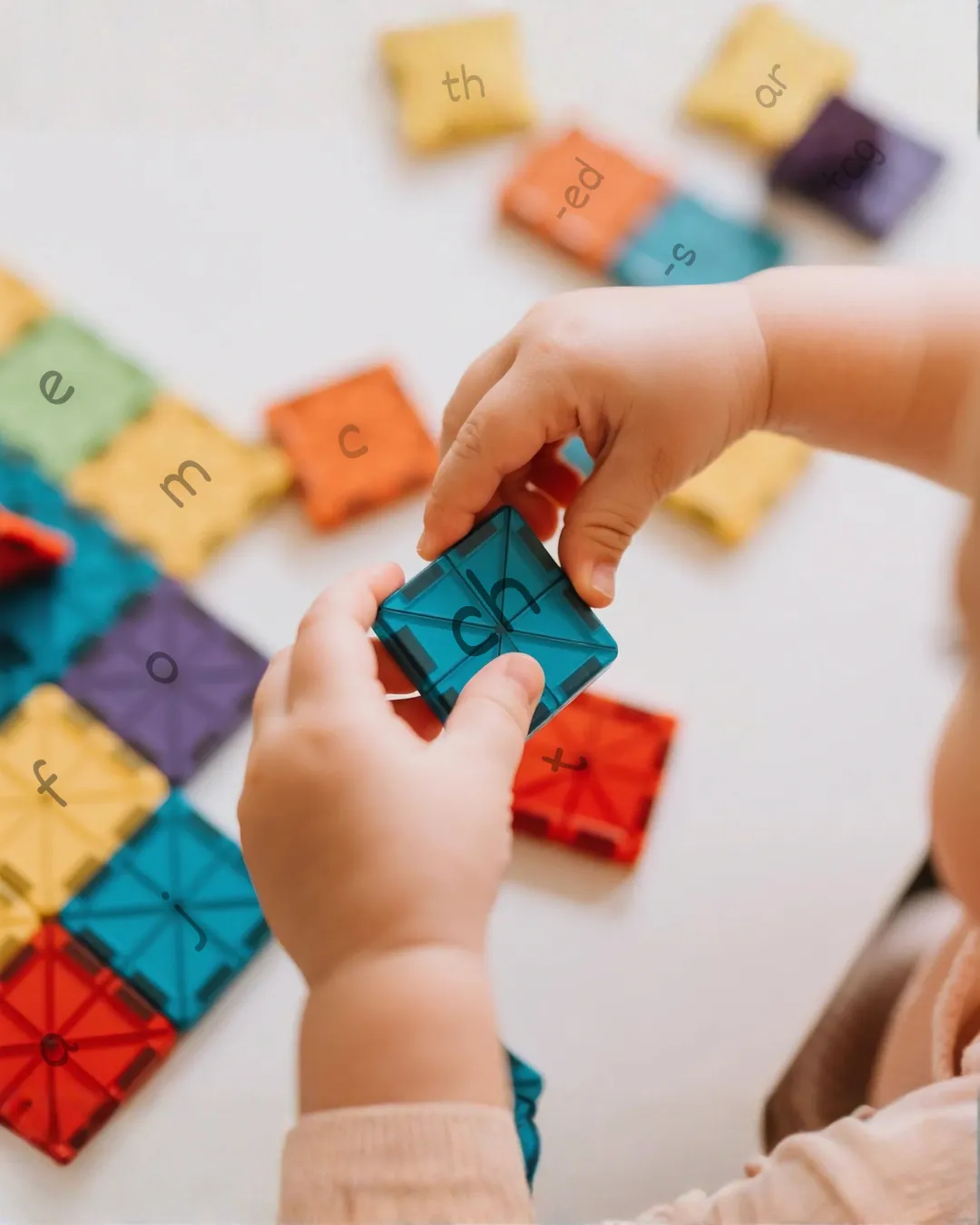
To support learning, families receive a multisensory learning bundle that includes hands-on materials used during tutoring. These tools help children practice skills in a concrete, engaging way — reinforcing learning without relying on worksheets or guesswork.
This approach allows children to:
Understand how reading works, rather than memorizing or guessing
Build skills step by step in a clear, structured way
Experience real progress that leads to confidence
This is targeted, dyslexia-informed reading instruction designed to create lasting change — not short-term fixes.
Click the button above to complete a short intake form.
Frequently Asked Questions
How do I know if my child needs dyslexia-informed tutoring?
If your child is trying hard but still struggles with sounding out words, spelling, reading fluently, or feels frustrated or anxious about reading, targeted support may help. Dyslexia-informed tutoring is especially helpful when progress has been slow despite school-based interventions or extra practice.
Does my child need a dyslexia diagnosis to work with you?
No. A formal diagnosis is not required. Many children show signs of dyslexia or reading difficulty before a diagnosis is made. Tutoring focuses on identifying skill gaps and providing the instruction your child needs, regardless of label.
How is this different from homework help or traditional tutoring?
Homework help focuses on completing assignments. My tutoring focuses on teaching the underlying skills that make reading possible. Instruction is explicit, structured, and multisensory, helping children understand how reading works rather than memorizing or guessing.
What ages or grade levels do you work with?
I work with learners from kindergarten through adulthood. Support is always tailored to the individual’s age, goals, and current skill level.
Is tutoring virtual or in person?
Tutoring is offered virtually and in person in Canandaigua, NY. Virtual sessions still include hands-on, multisensory instruction and materials.
What materials are needed for tutoring?
Families receive a multisensory learning bundle with hands-on materials used during sessions. These tools support meaningful practice between sessions in an engaging, low-pressure way.
Families will also need access to a printer. Practice sheets, spelling rule visuals, and other instructional materials are sent ahead of session time so learners can be prepared and get the most out of each session.
What happens during tutoring sessions?
Sessions are individualized and follow a clear, structured routine. Instruction focuses on building strong reading, spelling, and comprehension skills using multisensory, explicit teaching aligned with how the brain learns. Learners also develop an understanding of how words are built (morphology), which supports decoding, spelling, vocabulary, and meaning.
Lessons are supportive and engaging, with progress that is intentional and skill-based. As accuracy improves across reading and spelling, confidence and comprehension grow alongside it.
How often are tutoring sessions held?
To see meaningful progress, tutoring is scheduled at least twice per week for 50 minutes per session. Consistency is essential for building strong reading skills, especially for struggling or dyslexic readers.
What if I’m not sure this is the right fit?
That’s okay. The intake form helps clarify whether this type of support makes sense for you or your child before moving forward. There is no commitment until expectations and next steps are clearly outlined.
How do we get started?
Getting started is simple. Complete the intake form so I can learn more about your needs and determine whether this support is the right fit. I’ll follow up after reviewing your information with next steps.
Click the button above to complete a short intake form.
Testimonials

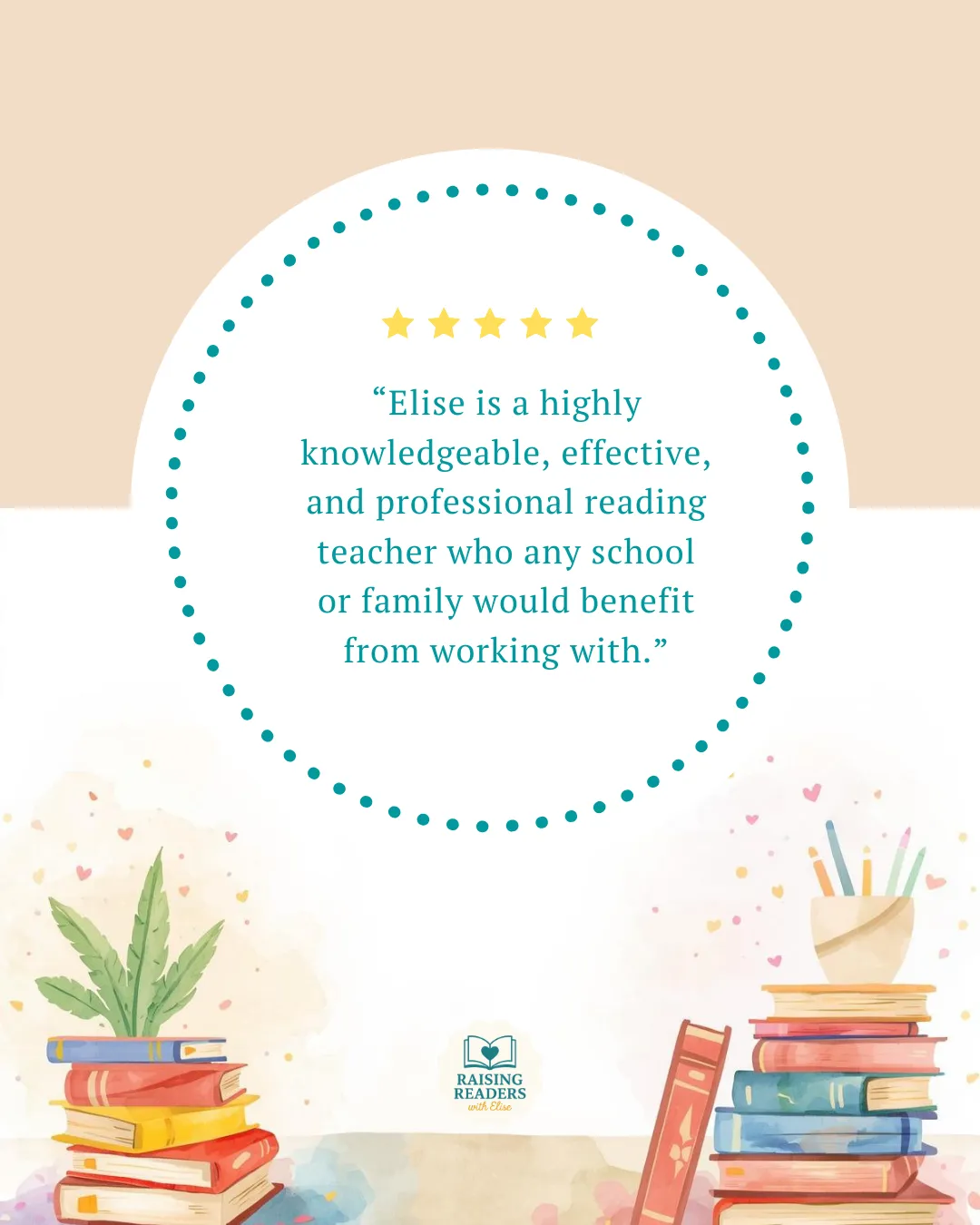

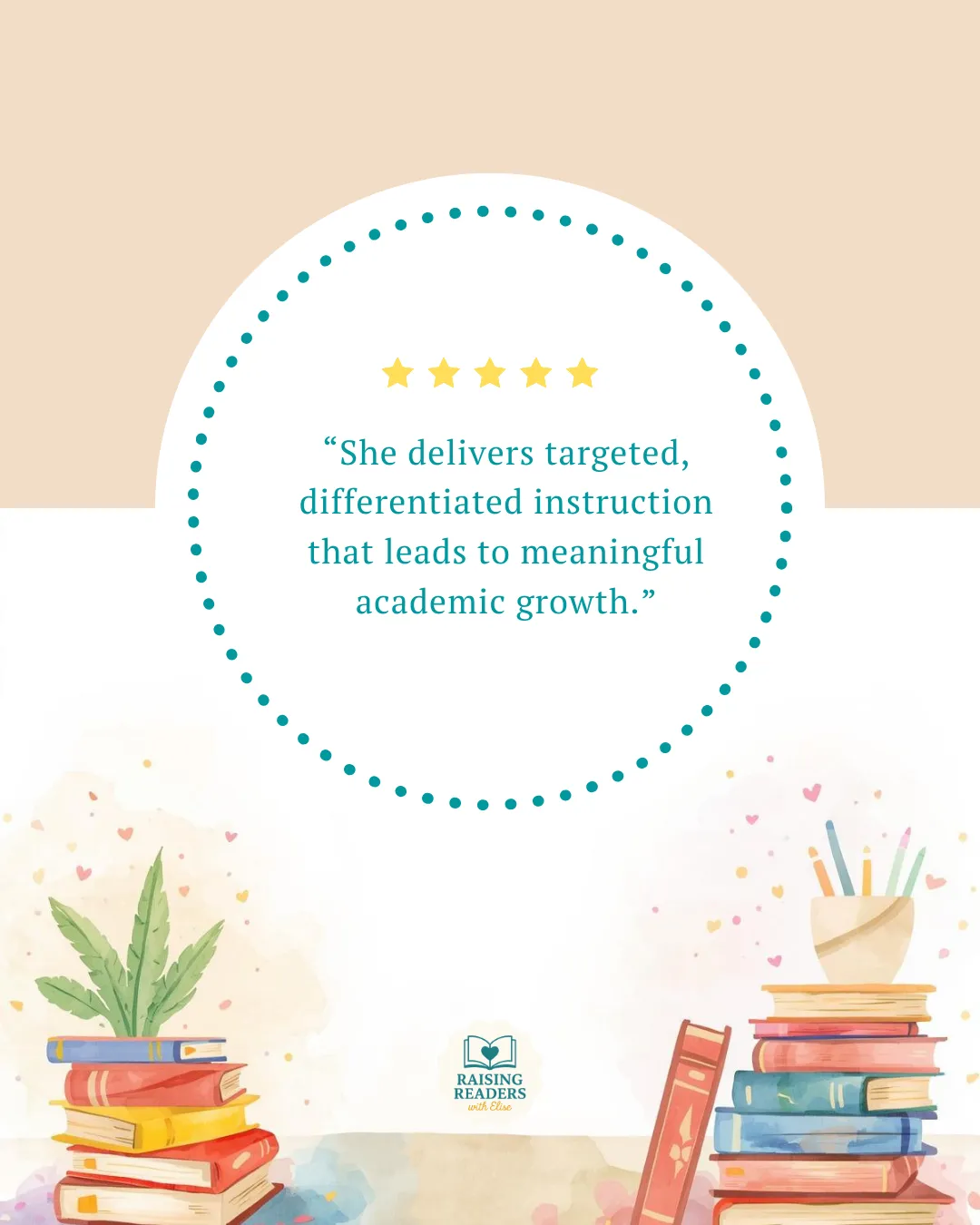

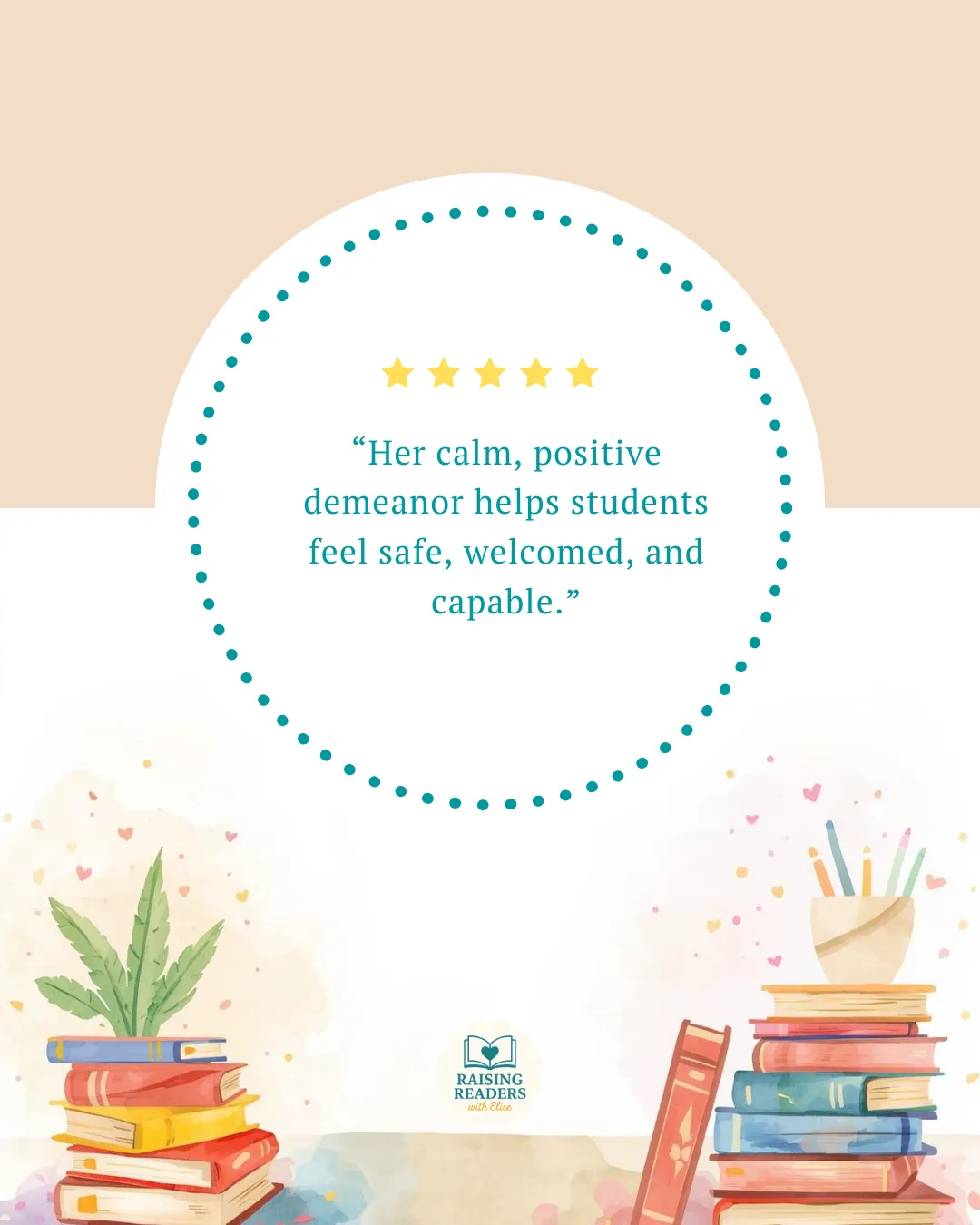
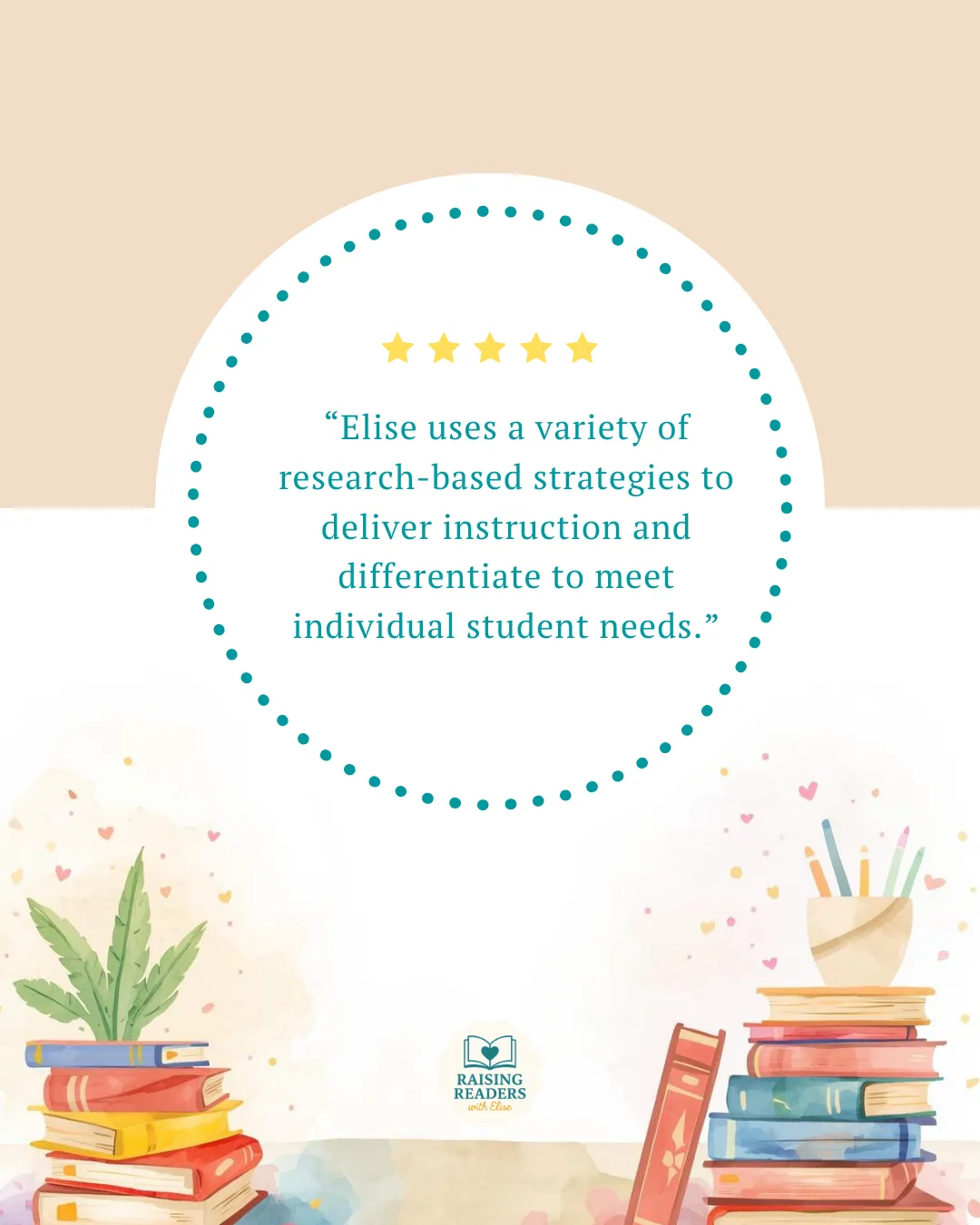


Digital Resources
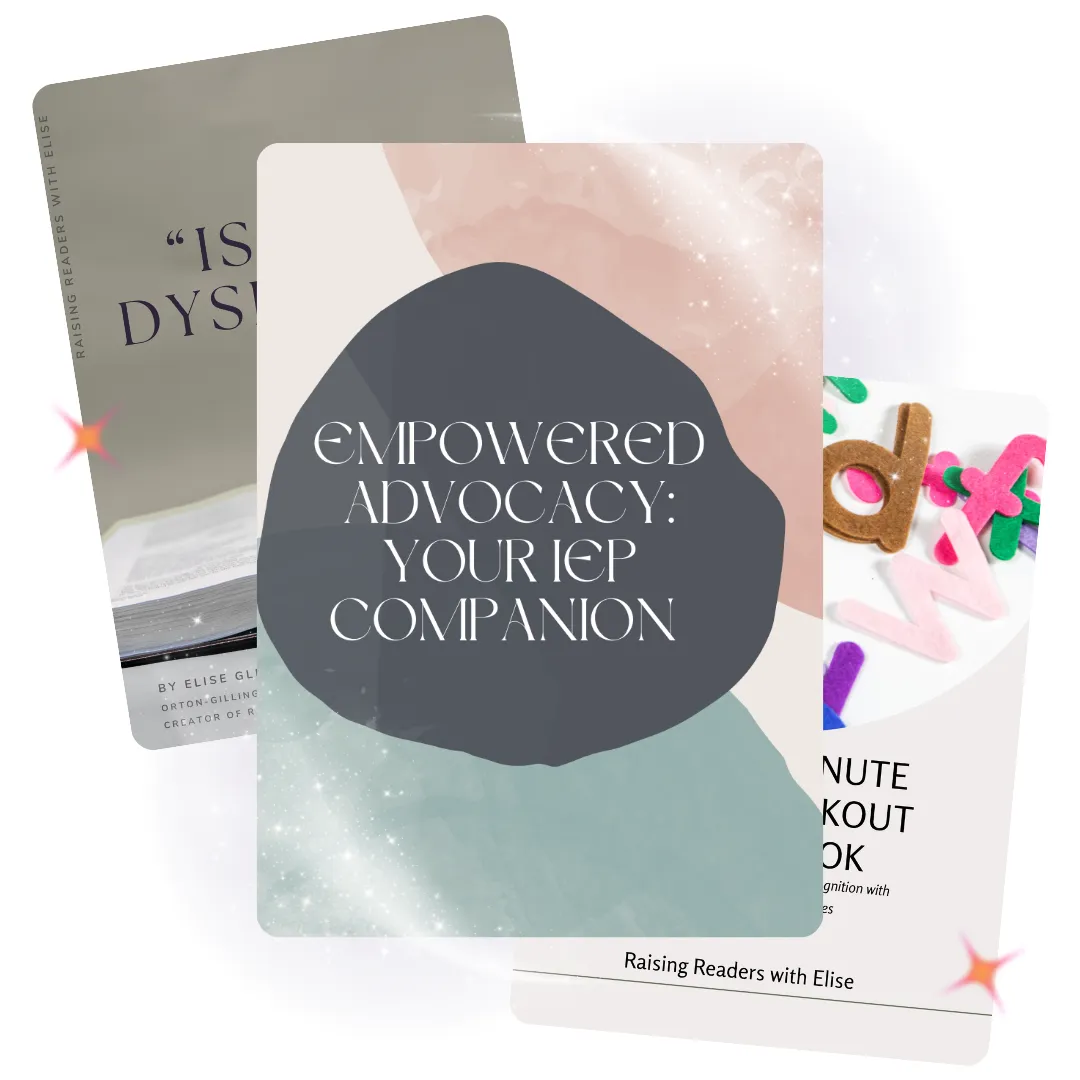
Evidence-based materials and printable activities you can use right away to build reading success at home.
Sample Resources:
"Is This Dyslexia?": A Parent Guide
Empowered Advocacy: Your IEP Companion
Daily 5-Minute Word Workout Workbook
© Copyright 2025 Raising Readers with Elise